#067: A Contract Is Built on Distrust. A Covenant Is Cut in Blood. 🩸


God has never once offered a contract. Every promise He has ever made was cut in blood.
Welcome, Family
Last week, we explored how innocence is not perfection. The tree was the mechanism, not the mistake.
This week: The Covenant Framework. Because how you relate to God’s promises determines whether you actually stand on them or just admire them from a distance.
Most believers relate to God the way they relate to a terms and conditions agreement. Skim it. Click agree. Assume there’s an exit clause somewhere. But God has never once offered a contract. Every promise He has ever made was cut in blood. And understanding that difference changes everything.
⏳ THE SIGN
The Fine Print Generation
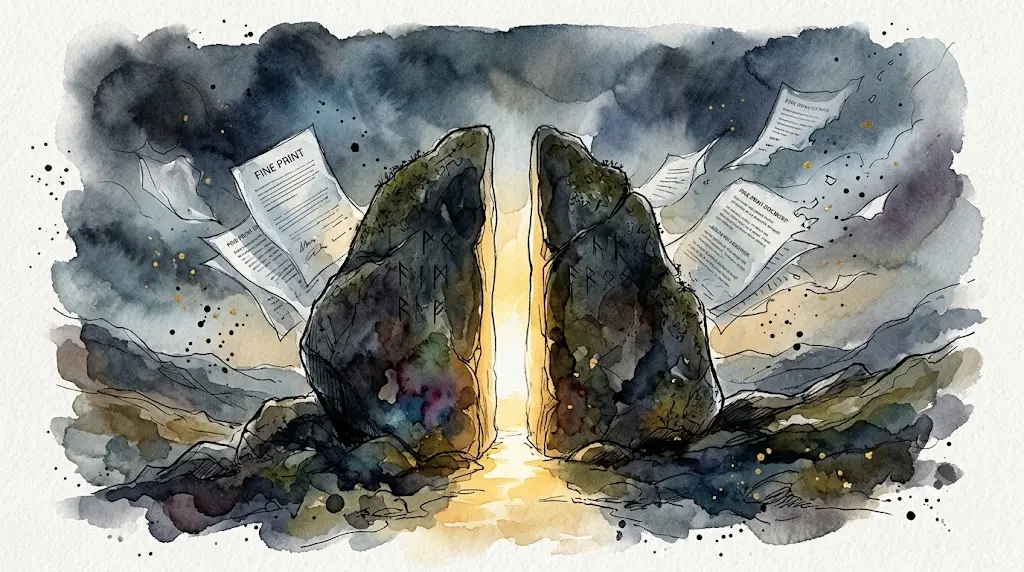
Gen Z signs more agreements than any generation in history and reads fewer of them. Every app, every subscription, every platform: pages of fine print reduced to a single button. “I agree.” Nobody reads it. Nobody expects the other party to fully honor it either.
That transactional, low-trust relationship with written agreements has quietly infected how an entire generation reads scripture.
God said it. But does it apply to me specifically? Is there an exception somewhere? What are the conditions? What if I’ve already violated something that nullifies it?
The promises get treated like fine print, technically there, probably important, but not something you’d stake your life on.
The Diagnosis: You cannot stand on a promise you’re still trying to find the exit clause in. And you cannot find the exit clause in a covenant because a covenant was never designed to have one.
📖 THE WORD
The Anatomy of a Covenant
“In the beginning was the Word, and the Word was with God, and the Word was God.” - John 1:1 (KJV)
“And he said, I am the God of thy father, the God of Abraham, the God of Isaac, and the God of Jacob.” - Exodus 3:6 (KJV)
“God is not a man, that he should lie; neither the son of man, that he should repent: hath he said, and shall he not do it? or hath he spoken, and shall he not make it good?” - Numbers 23:19 (KJV)
Contract vs. Covenant:
A contract is a legal agreement between two parties who don’t fully trust each other. It exists to protect both sides in case the other fails to deliver. Built on suspicion. Enforced by law. Dissolved when either party stops performing.
A covenant is something entirely different.
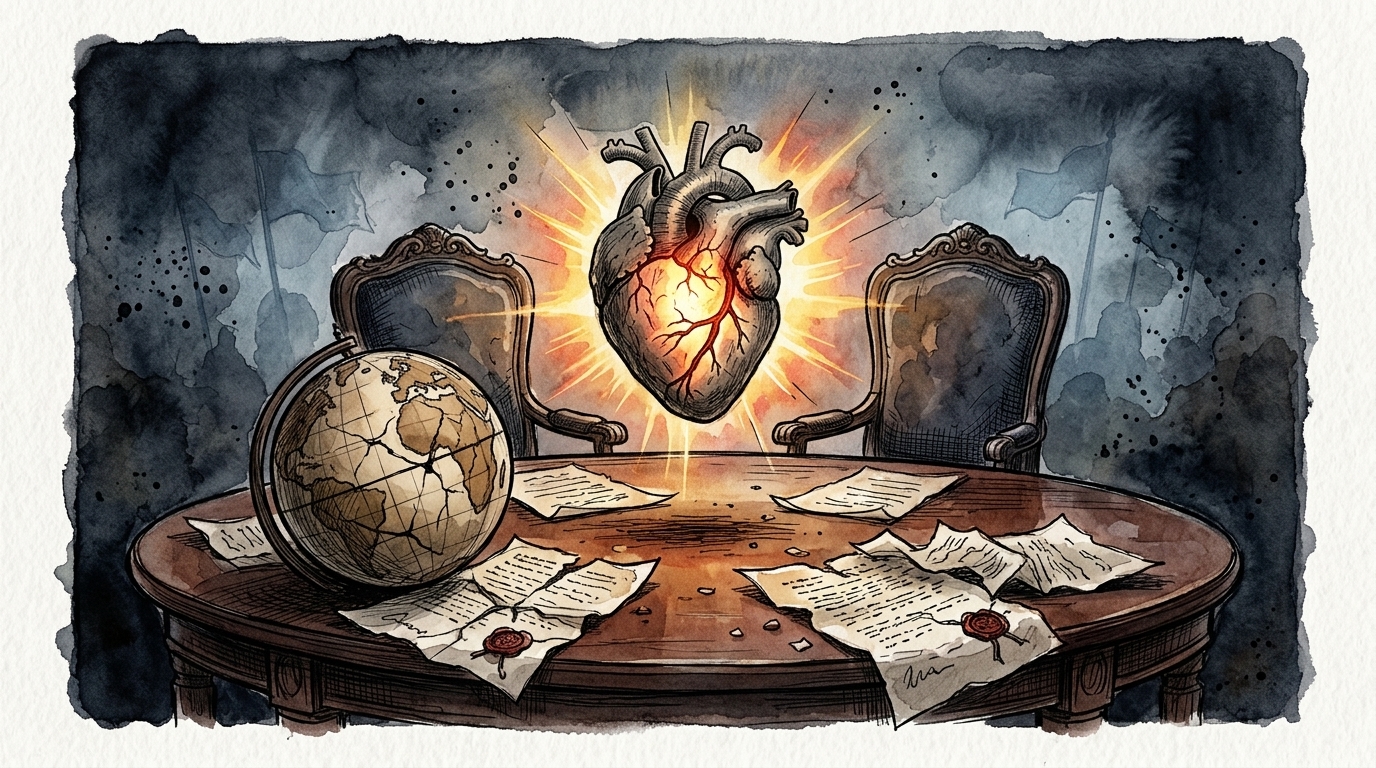
In the ancient world, a covenant was cut literally. Two parties would sacrifice an animal, split it down the middle, and walk between the pieces together. The act declared: if I break this agreement, may what happened to this animal happen to me. Blood. Name-sharing. Total commitment. No exit clause. No fine print.
God has never offered you a contract. Every promise He has ever made is a covenant.
Which means it isn’t conditional on your performance. It isn’t dissolved by your failure. It isn’t voided by your worst season. It was cut before you arrived and it holds whether you feel it or not.
The Word as Reality:
John 1:1 introduces Jesus not as King, not as Servant, not as Son of Man, but as the Word. This is deliberate. In Hebrew, the word dabar means both “word” and “thing.” The same word. Because in God’s economy, what He speaks and what exists are the same category.
He spoke 92 unique creative words in Genesis 1. Scientists spent centuries discovering 92 pure elements on the periodic table. Same number. The Word is not poetry about reality. The Word is reality, the source code everything physical was built on top of.
Which means when God makes a covenant promise, He is not offering a wish or an intention. He is speaking something into the category of things that exist.
🌍 THE WITNESS
Three Things Covenant Changes
1. HOW YOU READ THE PROMISES
A contract promise is conditional. Performance-based. Revocable. You read it looking for the clause that disqualifies you.
A covenant promise is unconditional at its foundation. God told Abraham his descendants would be as numerous as the stars before Abraham had done anything to earn it. Before circumcision. Before sacrifice. Before a single act of obedience. God cut the covenant while Abraham slept.
You did not negotiate your way into God’s promises. You cannot perform your way out of them either. Stop reading scripture like fine print. Start reading it like a blood oath from the most powerful Being in existence, made specifically, personally, to you.
2. HOW YOU HANDLE BROKEN SEASONS
Contracts dissolve when one party stops performing. Which means if your relationship with God feels contractual, every failure becomes a potential termination notice.
But covenant doesn’t work that way. God told Israel in Hosea, after their most catastrophic seasons of rebellion, that He would betroth them to Him forever. Not after they cleaned up. In the middle of the mess. The covenant held through what should have ended it.
Your worst season is not evidence that God voided the agreement. It is evidence that you are in a covenant and not a contract. Because a contract would already be dissolved.
3. HOW YOU CARRY THE WORD
The Hebrew word for truth is Emet, built from three letters. Aleph, the first letter of the alphabet, representing God. Mem, representing the might of the ocean. Tav, representing a cross, a covenant.
Truth is literally defined in Hebrew as God’s Mighty Covenant.
Remove the Aleph, remove God, from Emet, and the remaining two letters spell Met. The Hebrew word for death.
Wherever God is removed from truth, death follows. Relationships. Finances. Purpose. Peace. Every single time.
Which means carrying the Word is not a religious discipline. It is a survival strategy. The Word is not about God. The Word is the truth that holds reality together. Separate yourself from it and you separate yourself from the only foundation that doesn’t move.
🔥 THE WORK
The Covenant Audit
1. The Contract Check Where are you relating to God’s promises like fine print? Which promise have you been reading with an exit clause mentality? Name it. Then find the covenant context it was spoken in.
2. The Performance Trap Are you currently believing God’s promises are suspended because of your failure or your season? Write down one promise you’ve been disqualifying yourself from. Now read it again as a covenant, not a contract.
3. The Word Inventory Is the Word currently functioning as your source code (the foundation your decisions are built on) or as a reference document you consult occasionally? Name one decision this week you will make from the Word before you make it from your feelings.
4. The Emet Declaration Remove God from truth and you have death. Where have you been operating in a truth with the Aleph removed? Name the area. Reintroduce the Word into it this week.
Don't miss the next post
We send one email a week with thoughts like this, plus upcoming event details.
Welcome to the family!
We just sent your welcome email. Check your inbox (and spam or promotions folder) right now to get plugged in!